Newsletter Subscribe
Enter your email address below and subscribe to our newsletter

 ByJohn A
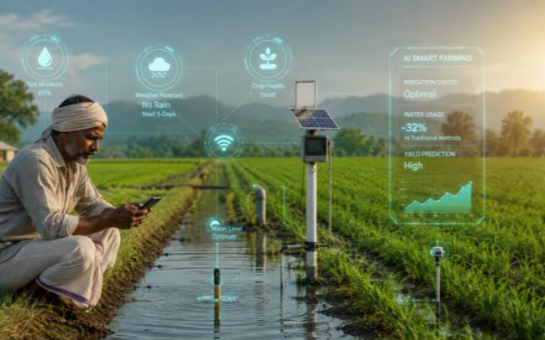
AI enables data-driven farming practices that optimize inputs, monitor soil health, and manage water use. By integrating sensors, models, and multi-source data, it supports precise decisions and adaptive management. The approach emphasizes transparency, governance, and quantified costs to build trust and scalability. Yet questions remain about data quality, equity, and long-term impacts on ecosystems and livelihoods, inviting further examination of implementation, metrics, and policy safeguards.
AI unlocks the foundations of sustainable farming by integrating precise, data-driven insights into core agricultural practices. Data streams converge to map soil health, moisture, and microclimates, enabling adaptive management without overreach. This analytical framework emphasizes data ethics and transparent governance, ensuring trust and accountability. Farmer empowerment emerges through actionable knowledge, collaborative decision-making, and scalable, autonomous tools that respect ecological limits and human stewardship.
Precision inputs leverage AI-driven decision-making to minimize waste across agricultural operations. Through precision optimization, fleets of sensors and models forecast nutrient and pesticide needs, enabling site-specific applications and reduced runoff. Data fusion across weather, soil, and crop phenology informs input efficiency strategies, lowering costs and environmental impact. Interdisciplinary insights emphasize scalable governance, reproducible metrics, and resilient farm systems for freedom-minded stakeholders.
See also: What Is Crypto Arbitrage?
Soil health, water balance, and pest dynamics are monitored through integrated AI-enabled systems that synthesize multi-source data—from soil moisture probes and nutrient sensors to remote sensing and pest scouting—to support adaptive management.
This approach analyzes soil health trajectories, microbial networks, and water budgeting to optimize irrigation scheduling, respond to pest dynamics, and calibrate trigger thresholds for proactive, data-driven interventions.
Data collection enables robust impact metrics, linking anomaly-free signals to outcomes.
Scaling benefits depend on transparent analytics, while adoption barriers, cost, and context must be quantified for informed, freedom-centered decision-making.
Farmers access AI tools through responsive platforms and turnkey apps, minimizing training time. Accessibility barriers diminish via guided onboarding and offline capabilities; user friendly interfaces promote adoption, while field-ready dashboards enable data-driven decisions for diverse soils and climates.
Forecasts cast as precise scales show upfront costs and roi, with sustainability gains offsetting capital outlays; data-driven estimates indicate favorable long-term returns though variability persists across crops and regions, reflecting interdisciplinary risk, adoption pace, and market freedom.
Data privacy on farms is safeguarded through encryption, access controls, and audit trails; data ownership rests with farmers, who determine sharing terms. Interdisciplinary standards combine law, agronomy, and data science to ensure trust and interoperable governance.
Beneath data-driven skies, AI can influence biodiversity beyond crop yields by modeling species interactions and genetic diversity, strengthening resilience. It quantifies ecosystem services, reveals trade-offs, and guides adaptive management for biodiversity resilience within ecological networks.
AI energy use and sustainability of its systems are evaluated through AI energy efficiency metrics and carbon footprint analyses, revealing tradeoffs between computation intensity and model performance, while exploring greener hardware, optimization, and novel training paradigms for responsible, freedom-oriented innovation.
In a village of fields, a patient clockmaker tends many gears: soil, moisture, pests. Each cog reports its minute truth, the gears whispering patterns of rain and root, waste and gain. The clock’s hands—AI, sensors, models—coordinate season to season, turning imprecise intuition into calibrated action. When data flows into transparent, governed routines, sustainable harvests rise like a well-tuned chorus. The village scales, not by luck, but by disciplined alignment of insight and practice.